Thursday, November 11, 2004
Iris Chang, the author committed suicide Nov. 10 2004. [PART 2]
http://www.jhu.edu/~jhumag/1197web/nanking.html
Nightmare in Nanking
By Sue De Pasquale

What Ying-Ying and Shau-Jin Chang were describing for their young daughter was a bloodbath that has come to be known as "The Rape of Nanking"--an eight-week orgy of torture and killing that began in December 1937 and left an estimated 300,000 Chinese men, women, and children dead.
"It was hard for me to even visualize how bad it was because the stories seemed almost mythical--people being chopped into pieces, the Yangtze River running red with blood," says Chang (MA '91) today. Chang's maternal grandparents had escaped Nanking just a few weeks before the killing began; though her parents had not yet been born at the time, both grew up hearing stories of the atrocities--stories that they in turn passed down to their American-born children, Iris and Michael. "It was very painful for me to think about, even then," she says.
As a grade schooler, Iris visited her local library in Champaign-Urbana, Illinois, to see what she could find in the history books. She found nothing, and remembers thinking: If the Rape of Nanking truly was as gory as my parents have insisted, then why hasn't anyone written a book about it?
Two decades later, someone has. The Rape of Nanking: The Forgotten Holocaust of World War II (BasicBooks/HarperCollins, 1997), by Iris Chang, is due out in bookstores later this month--in time to mark the dark event's 60th anniversary. While Chang's book is not the first to be written on the subject, it is the first narrative history aimed at a mass American market. Advance reviews have been favorable: Pulitzer Prize-winning author Richard Rhodes has described it as "a powerful, landmark book"; Nien Cheng, author of Life and Death in Shanghai, calls it a "gripping account" that has been "meticulously researched."
HarperCollins is looking for sales to exceed 70,000 copies, and Newsweek will run a lengthy excerpt from the book in its November 17 issue. Newsweek also purchased rights to run the excerpt in its Japanese and Korean language editions, and its English-language European editions, which means that after more than half a century of relative obscurity, the story of the Nanjing Datusha, or Great Nanjing Massacre, will reach millions of readers. (Chang refers to the city as "Nanking" in her writing and speech because that was its English name at the time of the massacre.)
To Chang, this last news may be the brightest spot to arise out of her labors to write about this somber chapter in history. "This is a book I really had to write," she says. "I wrote it out of a sense of rage. I didn't really care if I made a cent off of it. It was important to me that the world knew what happened in Nanking back in 1937."
As important, Chang says, is that the Japanese government be made to own up to the massacre. "This book is an attempt not only to alert the world to what happened, but to enable the Japanese to look into their consciences and decide what they're going to do about it as a nation," she says. "They have not yet apologized for what happened. They certainly haven't paid any reparations. They have not faced up to their responsibility in the way that the Germans were forced to do over, and over, and over."
ON MEETING IRIS CHANG for the first time in Sunnyvale, California, I'm struck by how young she seems--even younger than the 29 years I know her to be. She is tall and thin, with straight, black hair that she pulls back from her face in a ponytail. As she leads me through a sunny courtyard to her poolside apartment, she is sweet and chatty; it's not hard to see how she wound up a princess on the Homecoming Court during her undergraduate years at the University of Illinois. What's harder to picture is how she spent several years immersed in such horror.
Chang graduated from Illinois in 1989 with a degree in journalism. She did a summer internship for Associated Press and spent a year reporting for the Chicago Tribune before landing in the science writing program at Hopkins's Writing Seminars. There, to the envy of more experienced writers who have spent years trying to get their first book published, Chang landed a contract halfway through her one-year program. She was barely 23 years old.
The fact that Chang was fluent in Mandarin helped immensely, says Susan Rabiner, who was then an editor and vice president at Basic Books (a division of HarperCollins). Rabiner was looking for someone to write a book about a brilliant Chinese scientist who had been a pioneer of the American space age. Rabiner knew only part of his name--Tsien--and that he had been deported to China during the height of the Communist hysteria of the 1950s. Once back in China, to the United States' lasting chagrin, he went on to transform a primitive military culture into one able to deliver nuclear bombs intercontinentally.
Chang faced formidable obstacles in tackling research for the biography. For starters, Tsien Hsue-shen, who still lived in China, refused to cooperate. For another, much of the military information she needed to track down in both China and the U.S. was classified. Then there was the highly technical nature of her subject matter.
The result of her labors, Thread of the Silkworm (Basic Books), was published in 1995. The book was not a commercial success; fewer than 10,000 copies have been sold to date. But Silkworm earned positive mention in The Washington Post Book World, Los Angeles Times, Chicago Tribune, Nature, Science, and a host of other publications, both scientific and mainstream. The reviewers uniformly praised the young writer for her solid research and engaging style.
Rabiner, who had taken a chance on Chang, was impressed with the result: "Iris is an indefatigable researcher--very thorough and tenacious. That's her strongest trait," says Rabiner.
When Chang approached Rabiner about doing her second book on the Rape of Nanking, timed to commemorate its 60th anniversary, Rabiner says she and Basic Book's then-publisher "jumped on it right away. We both knew this was going to be extremely big." As Chang remembers it, the deal was signed within a few hours.
Chang sips lemonade as we talk in her writing studio, which turns out to be a room in the modest two-bedroom apartment she shares with husband Brett Douglas, a young Silicon Valley engineer. Her desk holds two of the largest, circular Rolodexes I have ever seen. One bulges with all of her contacts for the Silkworm book, the other her contacts for Nanking, she explains. On the wall across from her desk is a map of the city of Nanking, circa 1936. On it she has used colored markers to delineate landmarks: a pink line denotes "Cheng's Road," a green line traces "Tang's Road." Until recently, the map also held photos depicting scenes of torture and killing, taped to the spot in the city where they occurred. Chang says her husband was more than a little relieved when she had to take the photos down to send off to her publisher.
Indeed, the story of what happened in the days and weeks after Chinese forces invaded the city of Nanking does not make for easy viewing--or reading. To piece the story together, Chang examined primary source materials in four different languages (with the help of translators): Chinese, Japanese, German, and English. She read diary accounts of American missionaries and medical workers who were in Nanking at the time. She looked at photos and film footage that had been smuggled out of China. She combed articles that appeared in Japanese, English, and American newspapers. She corresponded with a former Japanese soldier who had taken part in the massacre. She examined reams of U.S. and German military communications. And she spent more than a month in Nanking, touring massacre sites and interviewing Chinese survivors.
| The Japanese invasion of the Chinese capital of Nanking came at the midpoint of its war against China, which began in 1931 with the seizure of Manchuria and ended in 1945; during that period an estimated 10 million to 30 million Chinese perished, according to the Tokyo War Crimes Tribunal, and Chinese war historians.
|
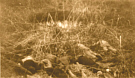
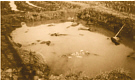
| Getting rid of all the bodies proved to be a monumental problem. One Japanese general complained in his diary that it was nearly impossible to find ditches large enough to dispose of 7,000 to 8,000 corpses at a time. Some soldiers attempted cremation, but ran out of gasoline and instead left mountains of smoldering corpses. Some ponds in the city actually disappeared because the bodies absorbed all the water. Chang says many of the bodies were dumped into the Yangtze River, lending credence to her parents' earlier stories of the Yangtze running red with blood.
|
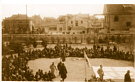
| In another interview, which Chang pops into her VCR to play while I'm there, a woman tearfully reads from a prepared statement. Chang translates for me as the woman shares her story, which is heartbreaking to watch and to hear. Liu Fonghua was only a year old when she was yanked from her father's arms before he was led away to be executed. Her mother, she says, never recovered. "Blood and tears were her life," Fonghua reads into the camera. "As soon as anyone mentions the Nanjing massacre, she couldn't help but cry uncontrollably and suffer headaches for a long time. I never saw her smile. Because my father's death was so brutal, and also because my mother endured hardship all her life-- hardship that was carved onto her very bones and seeped into the deepest recesses of her heart--my mother could never smile again." By the time Liu Fonghua finishes reading her statement, she is sobbing so hard she can barely talk. Tears drip from her chin. Chang turns off the television set, and we sit in silence for several minutes, drained. Meeting the massacre's survivors face to face, she says quietly, was both the best part of her trip, and the worst. "There were times when I really wanted to cry, but I couldn't. It had reached a point in me where there were no more tears." From the outset of the project, Chang knew she did not want to fill her book with one atrocity after another. So in addition to examining the massacre itself, she also deals with such questions as, What could have motivated the Japanese soldiers--many of them still boys--to behave so heinously? "I wanted to probe the forces by which a government could turn non-violent people into killing machines," she says. "I'm intrigued by the potential for good and evil in our society." In her book, Chang posits several theories to explain how the Nanking atrocities could have transpired. Some scholars believe the seeds for violence were sown by the brutal, humiliating way in which Japanese officers and soldiers were treated by their higher-ups. When these same soldiers were given the power of life or death over the Chinese, says Chang, "it is easy to see how years of suppressed anger, hatred, and fear of authority could have erupted." Exacerbating the situation was the contempt that the Japanese held for the Chinese--the product of decades of propaganda and social indoctrination. Chang says that for many Japanese soldiers, murdering a "sub-human" Chinese was akin to squashing a bug or butchering a hog. Religion also played a factor, she believes. The Japanese imperial army considered itself to be on a holy mission--that it was Japan's destiny to control all of Asia.
|
| But while The Rape of Nanking does plumb the depths of man's inhumanity against man, it also offers a few, shining moments of redemption. While hundreds of thousands of Chinese met their deaths that winter of 1937-38, thousands of others were saved--largely due to the heroic efforts of two dozen Western foreigners who were living in Nanking at the time. They maintained a two-and-a-half-square-mile wide "international safety zone," which at its height served 250,000 Chinese refugees.
|
| Beyond the issue of suppression within the media, says Chang, there is the denial on the part of right-wing scholars and government officials. When Chang shifts the conversation to this subject, her earlier sunniness disappears. She is angry, and it shows. "There are people who are openly denying that the [Rape of Nanking] happened, and the government supports the practice of enshrining them," she says, her voice taking on an edge. "It's like building a cathedral in the memory of Hitler, and worshipping statues of Hitler as God." What would Chang like to see from the Japanese? She responds without hesitation. "First and foremost, a sincere apology from the prime minister, issued on behalf of the entire government, for what happened in Nanking and elsewhere in China. At a minimum, they should put in their textbooks a true accounting of what happened. They also need to open up their archives to scholars. And Japan definitely should be paying reparations for [the massacre]." Interest in the Nanking massacre has risen markedly in the last few years; that's partially due to the efforts of a new generation of Chinese-Americans--activists who are intent on getting the word out through books, documentaries, and symposiums. Later this month, Princeton University will host an international conference on the Rape of Nanking; Chang will be there to talk about Japanese suppression of information about the massacre and to share new material (diaries and letters) that she unearthed during her research. Though her book is now finished, Iris Chang has absorbed the pain and horror of the Nanking massacre in a way that is hard to set neatly aside. She's thought hard about channeling her passion into activism, but ultimately has decided to move on with her writing. There are other stories that need to be told. "Political activism is a full-time job, and I see myself primarily as a writer and a scholar," Chang says. "Over time, I may have more impact on the world, I think, as a writer of books and articles than I could ever have as a political activist." Sue De Pasquale is the magazine's editor. |

